
Arrival in Rio de Janeiro
We arrived off Rio de Janeiro in the twilight of a grey and pink sunrise. With the day light creeping in behind us, the unmistakable cones of Rio’s inselbergs and long mountain ridges formed an undulating, blue horizon ahead. Off to the north, the high ridgeline of the Serra do Camburi loomed dark against a sky that was beginning to tinge gold.
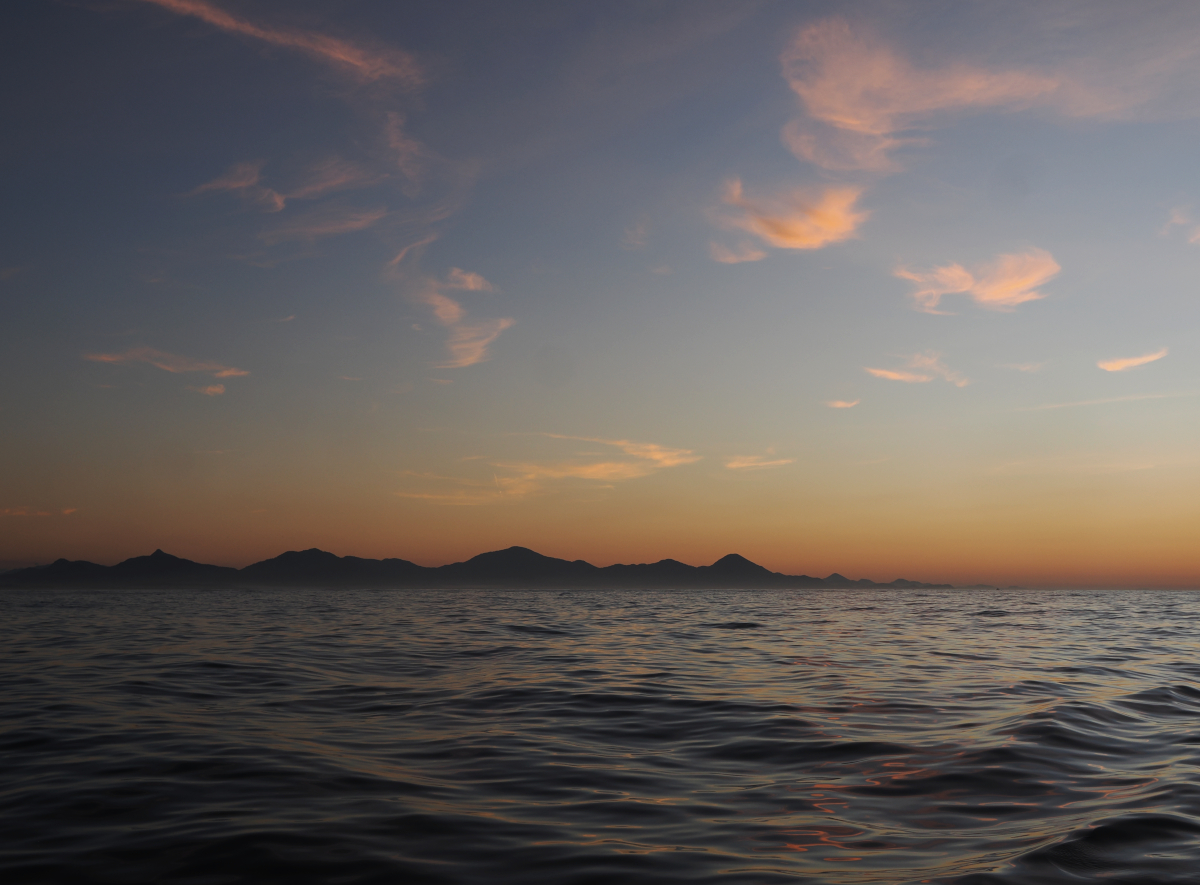
Beautiful morning sky over the Serra do Camburi, north of Rio.
Rio’s famous skyline
Even nearly 10 miles off there was no mistaking the skyline ahead of us with Morro do Pão de Açúcar (Sugarloaf Mountain) sitting low in the foreground and the high peak of Corcovado, the resting place of Cristo Redentor (Christ the Redeemer), rising high behind it.
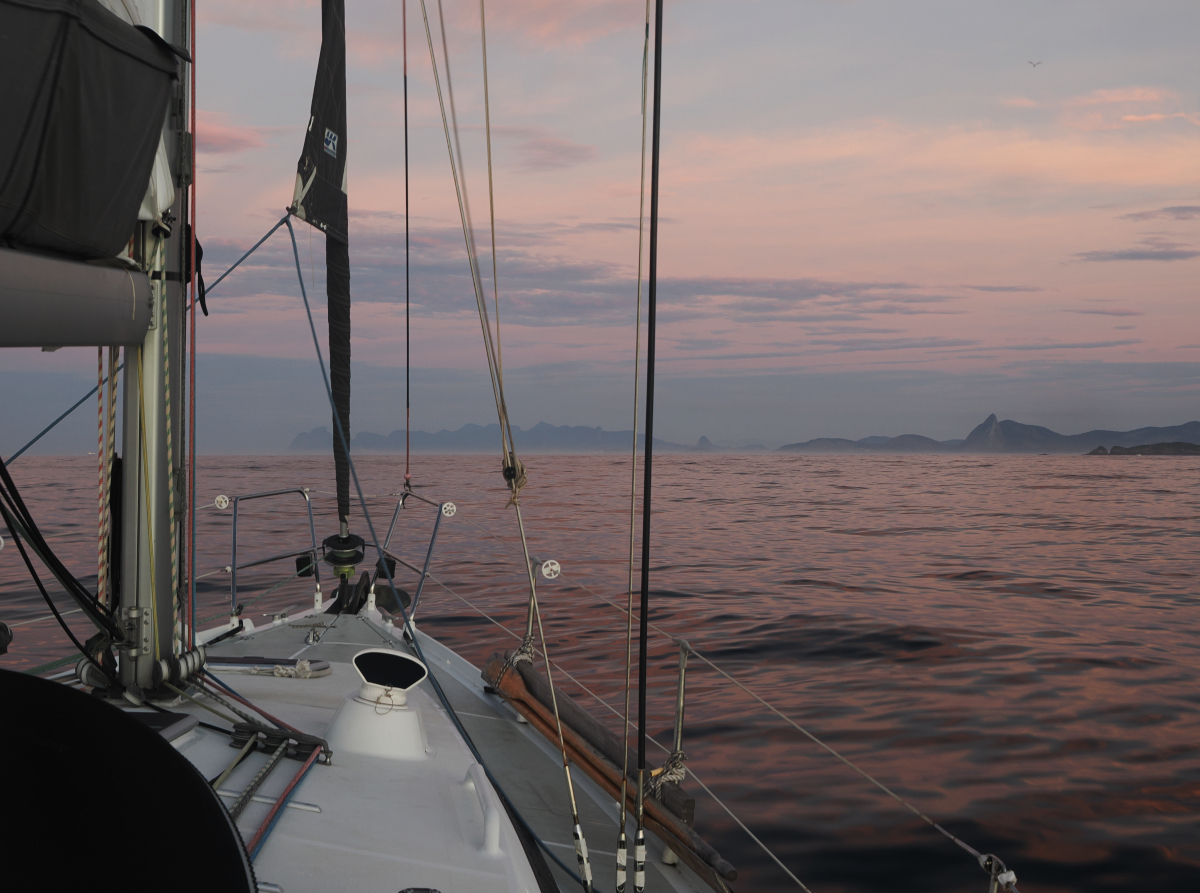
Rio de Janeiro slowly appearing in the distance.
We had left Arraial do Cabo mid-afternoon the day before, and, with a run of just 78nm our intention was to time our arrival for daylight, and preferably, just on daylight. We had achieved that quite nicely and now, though bleary-eyed after a night of four-hour watches, we were both excited to be entering this renowned and stunning harbour.
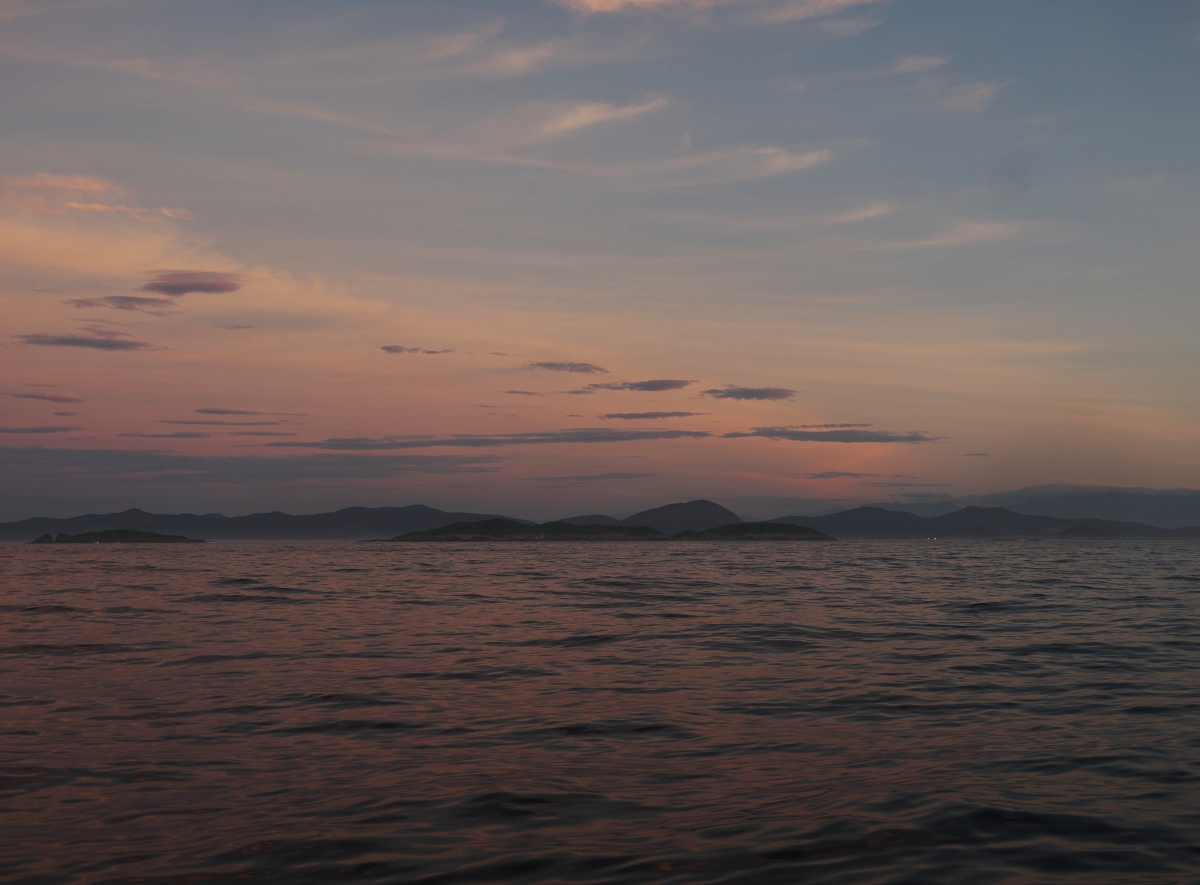
Dawn certainly put on a show for us approaching Rio de Janeiro.
But sailing boats being sailing boats, things like entering a harbour tend to happen slowly. So as the pinks and golds gradually washed out of the day’s colour palette, to be replaced with the blues and light greys of a partially clouded day, the city and harbour gradually grew in front of us.
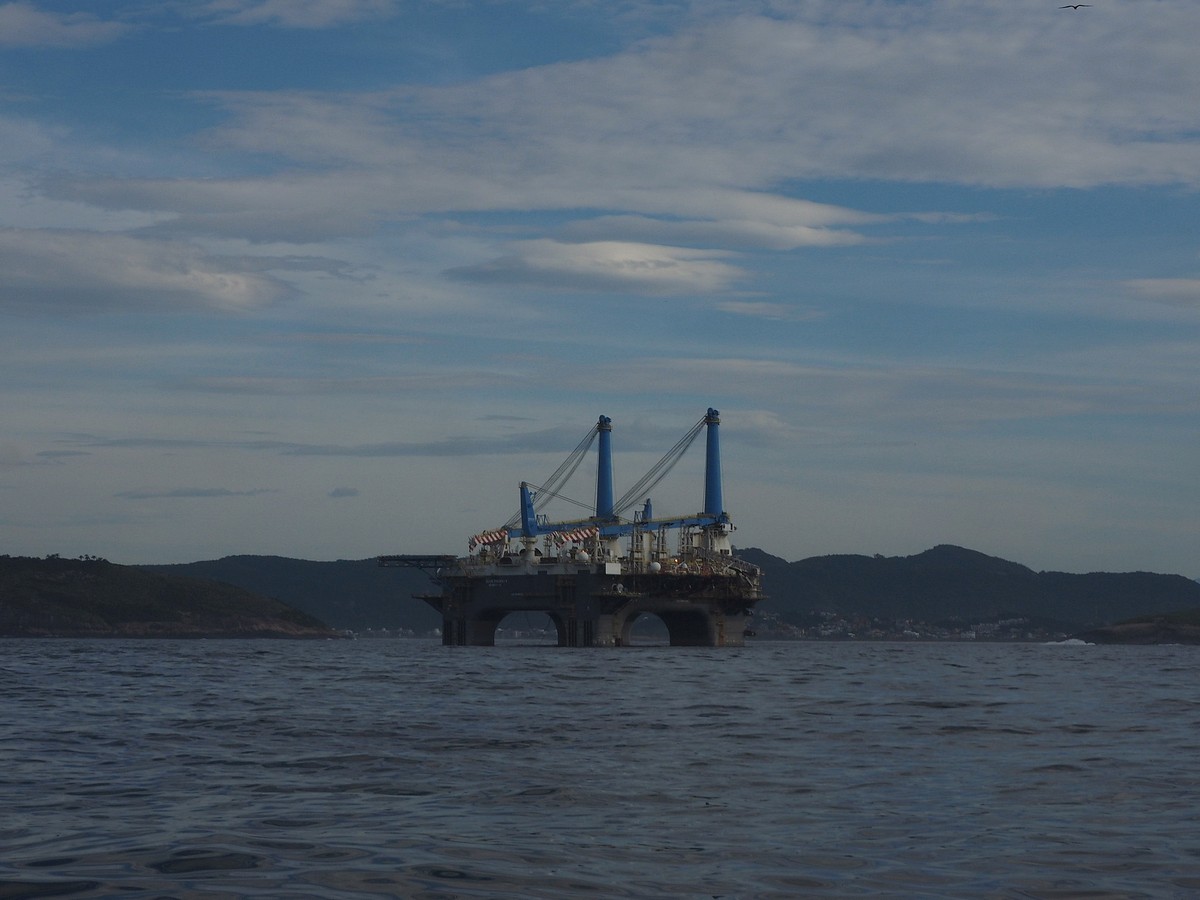
An oil platform parked off Rio, another sign we were near Brazil’s main oil and gas fields.
Soon enough we could see not only Corcovado’s high dome but also its resident Cristo, arms outstretched and welcoming us, ‘Dudes! Great you could make it!’ Or something like that.
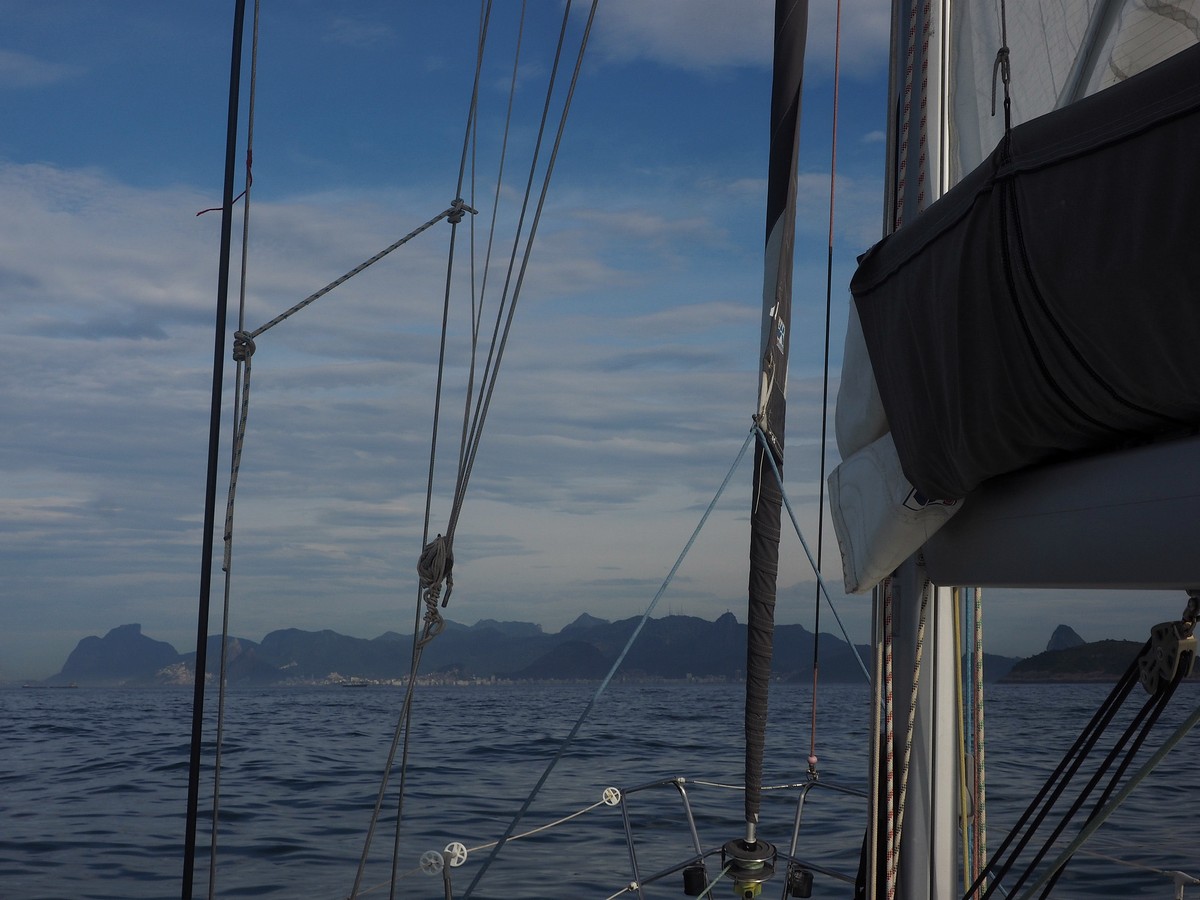
Cristo welcoming us, just to the left of our forestay. In recent years, he has been joined by a few telecommunication towers.
Guanabara Bay
The entrance to Guanabara Bay is littered with small islets and rocky reefs, some of which in 19th century were transformed into now obsolete, low, domed forts to complement the selection of more substantial forts that were established at different times and on the various peninsulas within and around the bay’s entrance, with the primary intention of keeping the British at bay.
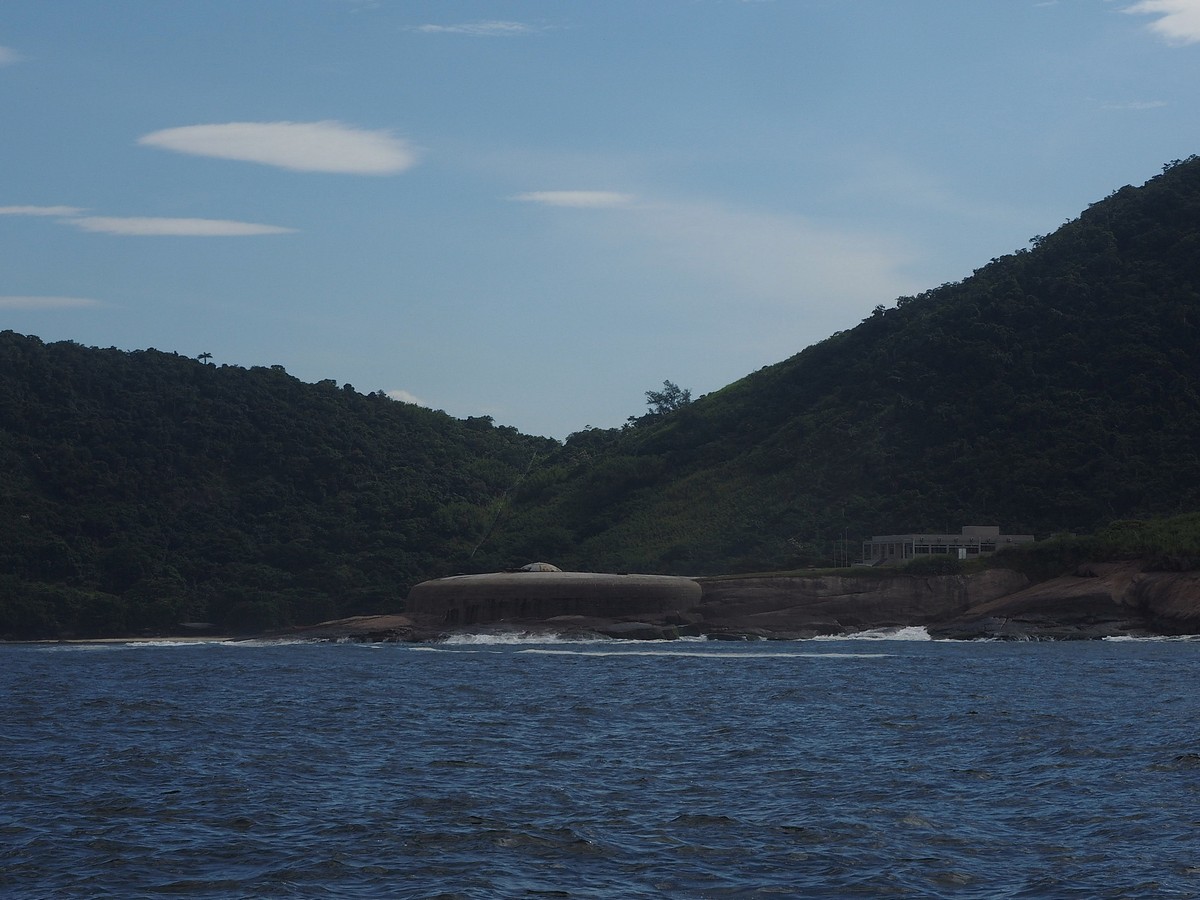
Forte Imbuí, one of the many forts at the entrance into Guanabara Bay.
We picked our way through these, slipping in behind a Brazilian frigate and in front of an oilfield supply ship as we crossed to the southern side of the harbour and made our way into the first bay on the southern side of Guanabara. Here, in the shadow of the Pão de Açúcar, lies the leafy and quaint suburb of Urca and, off its narrow cove, a mooring field where we hoped to be able to grab a mooring buoy for a week or so.
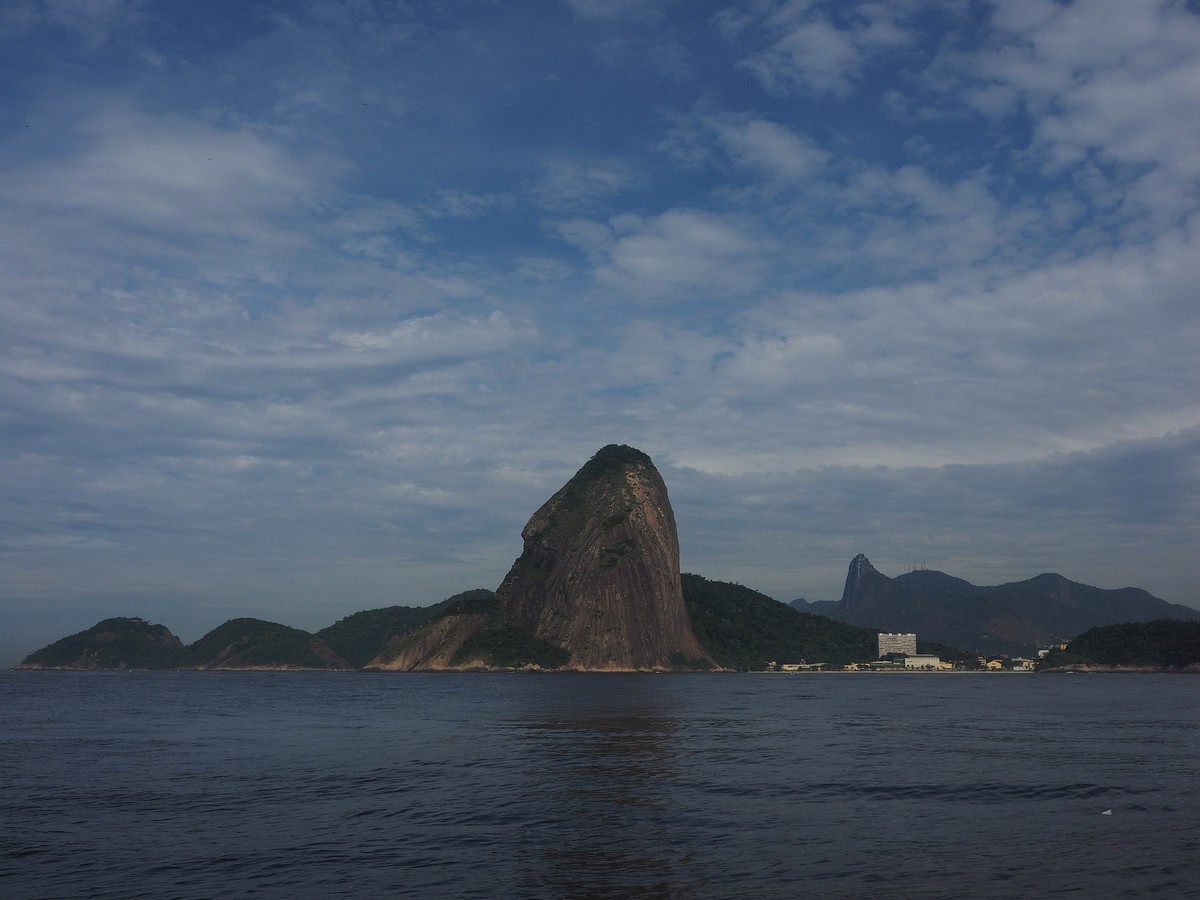
Entering Guanabara Bay with Morro do Pão de Açúcar, Sugarloaf Mountain, on our portside, and Corcovado and Cristo in the background.
Giovanni’s mooring field
As we came in we radioed Giovanni, the mooring field’s resident manager, and in David’s very best Portuñol, asked if there was a buoy for us. Giovanni, however, wasn’t doing the patience-with-the-foreigners thing, instead, he was just happy to see us and rabbited on in rapid Portuguese, which over the VHF radio was rendered even less intelligible to David than normal. David tried again in English only to get, “Não Ingles” and that was it. Oh dear, what now?
But never fear, as we came in closer, there in a dinghy waving to us was Giovanni who then led us to a vacant buoy and helped us moor up. Then with a big smile, and in English, he yelled, “Water, gas, tools, anything you need, you come to Giovanni”, he shot off back to his motor cruiser, also called Giovanni, and left us to get ourselves in order.
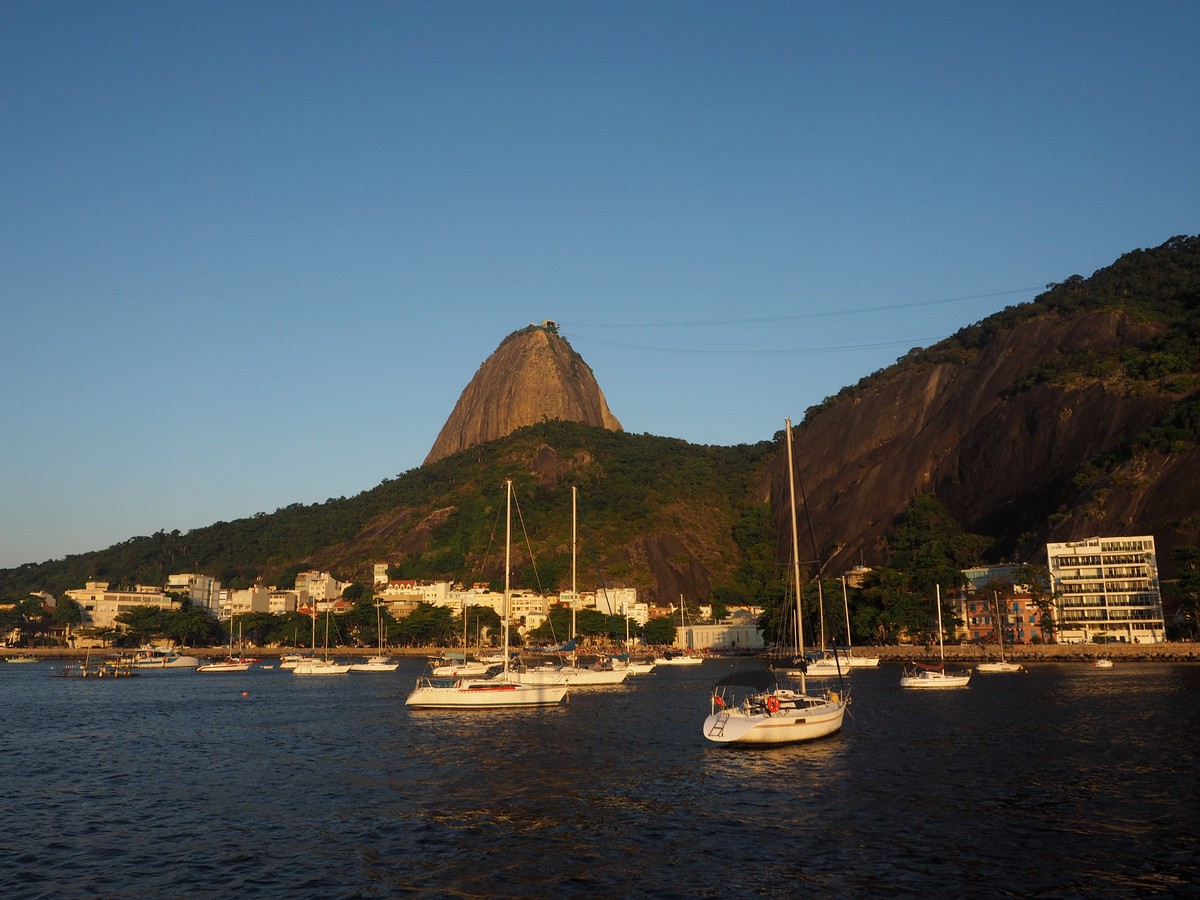
Giovanni’s mooring field in the suburb of Urca. Not a bad spot.
Iate Clube de Rio de Janeiro
It turns out that the mooring field is owned by the famously exclusive Iate Clube de Rio de Janeiro which is situated at the head of this small bay. The ICRJ own a vast expanse of waterfront between beautiful Urca and the high-end suburb of Botofago and have populated it with fine restaurants, swimming pools, boat houses, chandleries, a shipyard etc, etc.
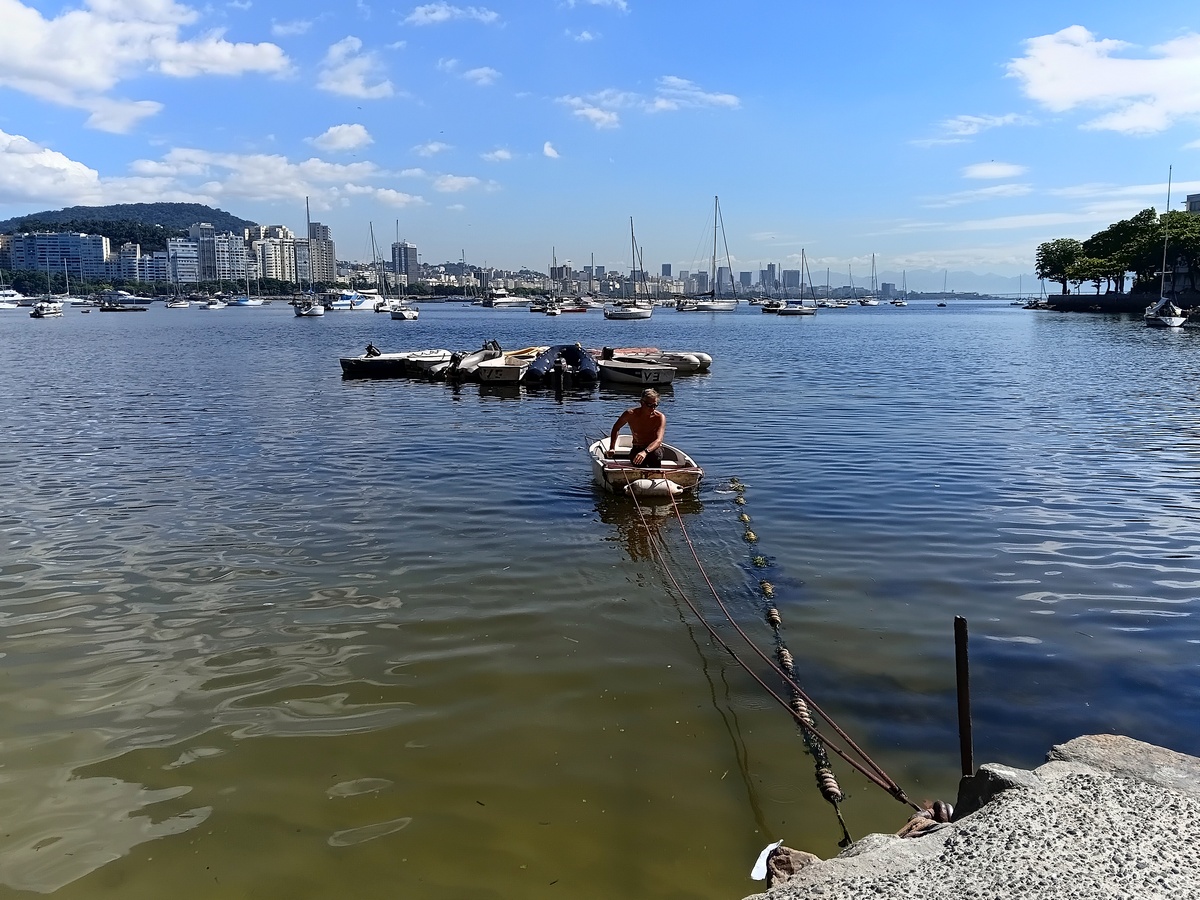
The dinghy island at Giovanni’s mooring field where you tie off your own dinghy, and then use a shared dinghy to pull yourself to shore, and back.
The Clube is exclusive enough that visiting yachtfolk are not welcome on Clube grounds and certainly could never bring their boats in to a berth there: VIPs only thank you. However, while their standards may be high, they are not stone-hearted given that they provide the mooring buoys further out in the harbour free for visiting boats. Very generous that is given the splendid location and happy community that Giovanni cultivates.
Location-location-location
We ended up spending the next three weeks in a prime Rio location with our boat under Giovanni’s (and Cristo Redentor’s) watchful eye while we savoured the delights of this fantastic city and did boat chores and repairs.
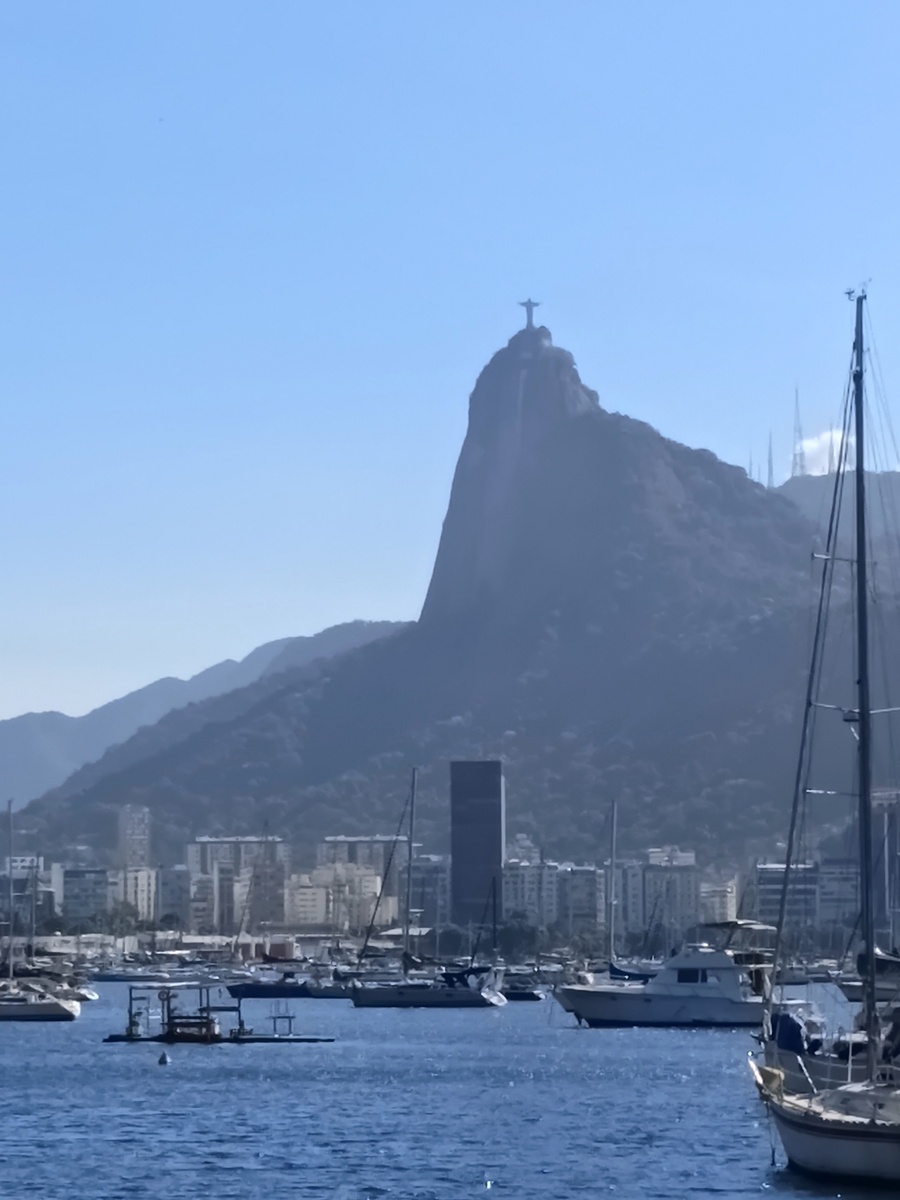
Yuma (in the centre) under Cristo’s watchful eye.
OK, not quite for nothing as we made a contribution for maintenance of the buoys (apparently), so AUD250 for three weeks accommodation, security, tourism advice, assistance with repairs and supplies, weekend BBQs and caipirinhas on the Cap. Cloroquina, and the cheery and friendly live-aboard community while in South America’s most expensive city. Bargain!
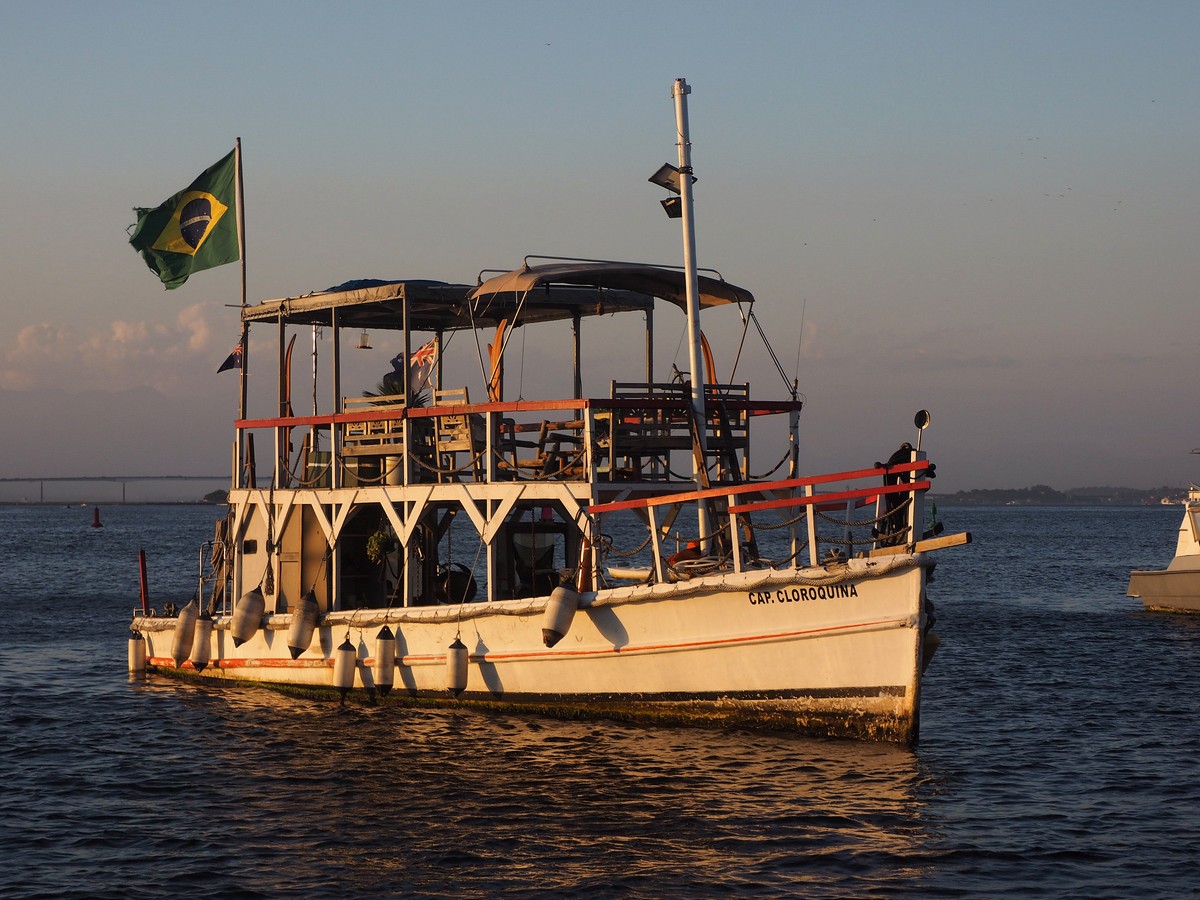
Our neighbour, Cap. Cloroquina, where many a churrasco (BBQ) was held and many a caipirinha was drunk.
One Comment
Leave A Comment
 At anchor next to a submarine
❤️