
A rather uneventful passage
We left the Abrolhos islands early on Friday morning for the 170nm passage to the city of Vitória on the mainland. With the conditions forecast, a nice 10-15k from the N/NW and a 1-1.5m swell from the NE, we expected that this would take us about 1.5 days.
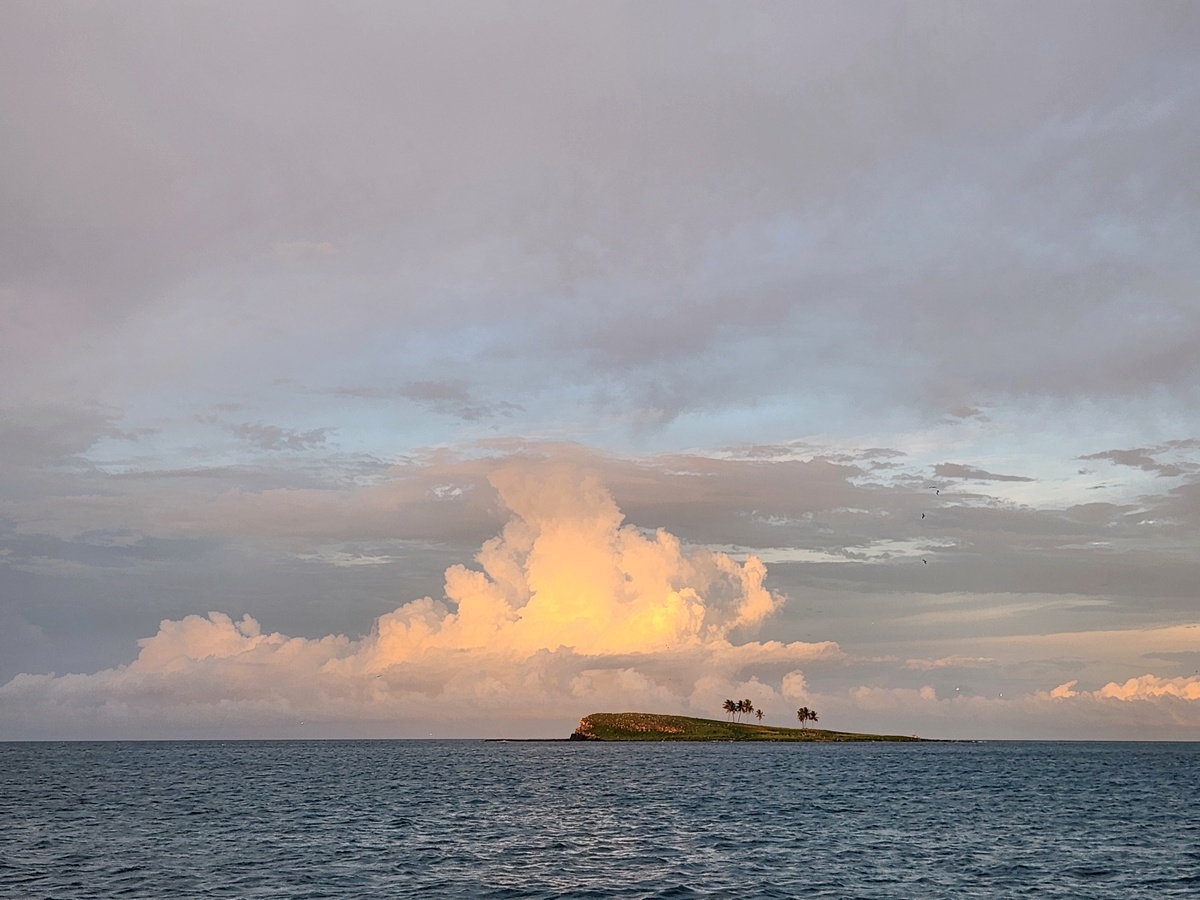
Last view towards Ilha Siriba at the Abrolhos, with clouds of concern in the background.
CAPE and thunderstorms
There was however one concern in the forecast and that was the quite high values (1500-3000 joules per kilogram) for CAPE, i.e. the slightly mysterious parameter Convective Available Potential Energy.
CAPE is a measure of the atmosphere’s instability with values ranging from zero (stable) to 3500+ (extremely unstable). Values in excess of 2500 J/kg are of concern as they indicate atmospheric conditions that support the formation of thunderstorms, lightening and, if there is a bit of rain about, intense squalls.
Though they are often impressive, none of these are much fun when you are sitting on a small boat in the middle of the ocean.
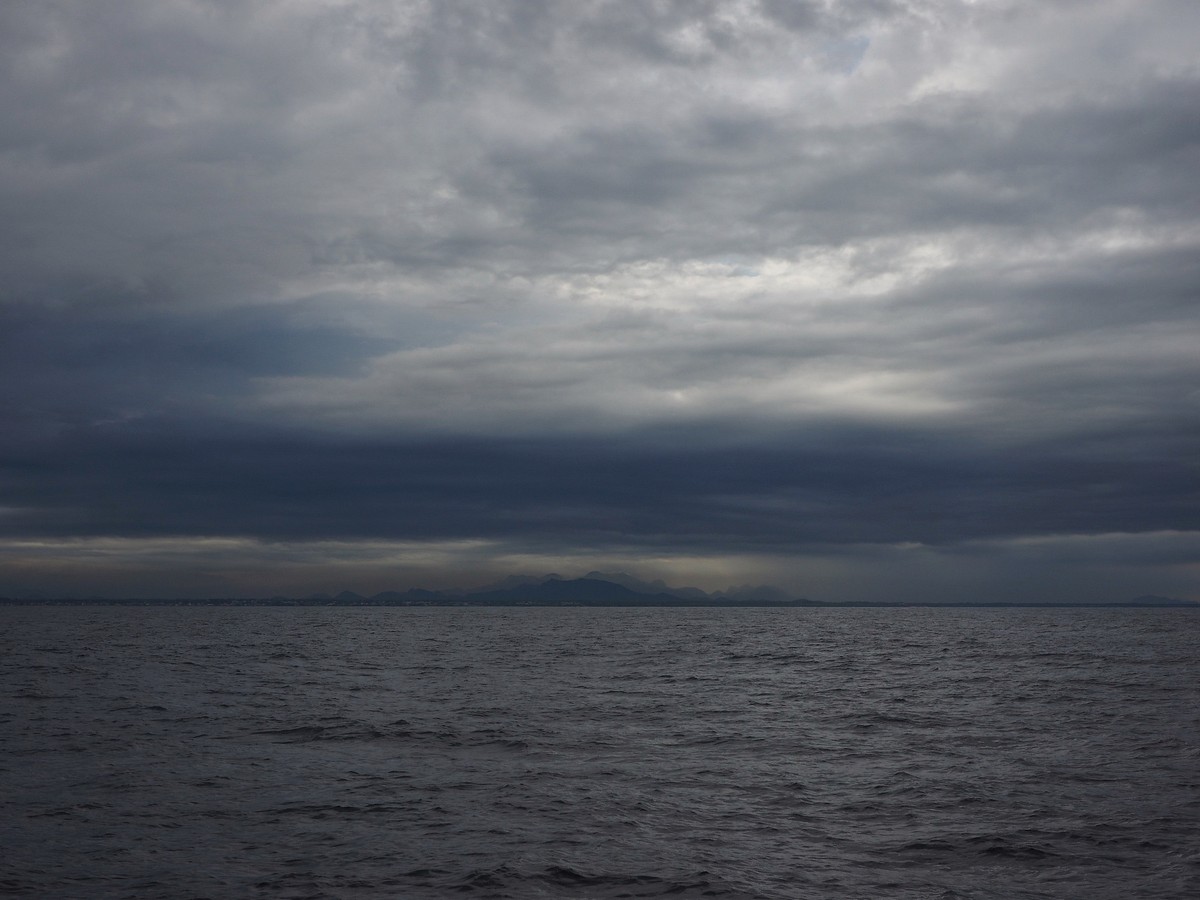
Dark clouds over the mainland.
Not surprisingly given the CAPE predictions, thunderstorms and lightning were part of the forecast, so we kept a good look-out for the formation of cumulus and cumulonimbus clouds, those lovely, pillowy cloud formations that rise to great heights and can indicate trouble ahead. If they looked too active our intention was to try going around them if possible.
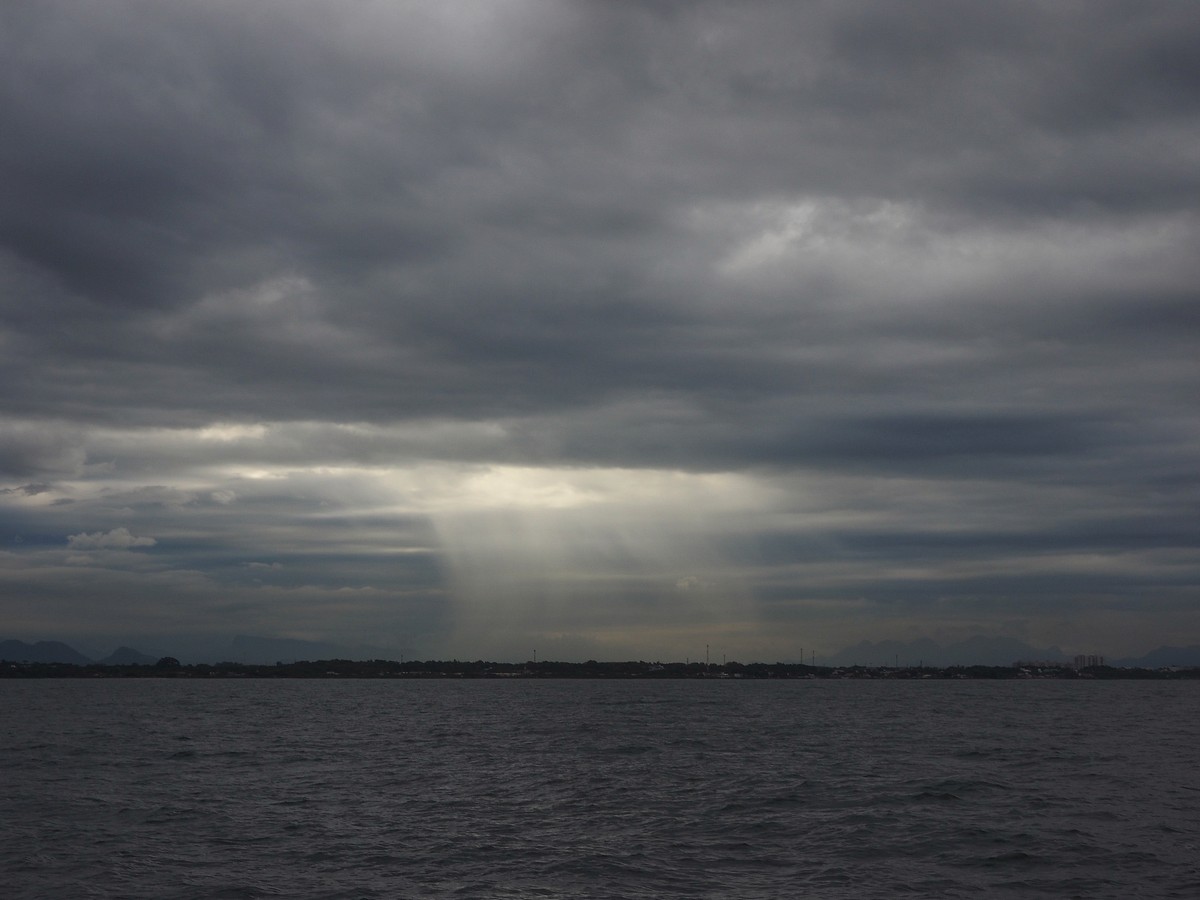
Impressive showers along the way.
During the crossing the skies certainly did their best to look threatening, with large dark clouds stretching from one horizon to the other. Happily though, we were lucky once again and only experienced pleasant winds with ‘gusts’ up to 18kn and a bit of rain every now and then. Neptune was still smiling on us.
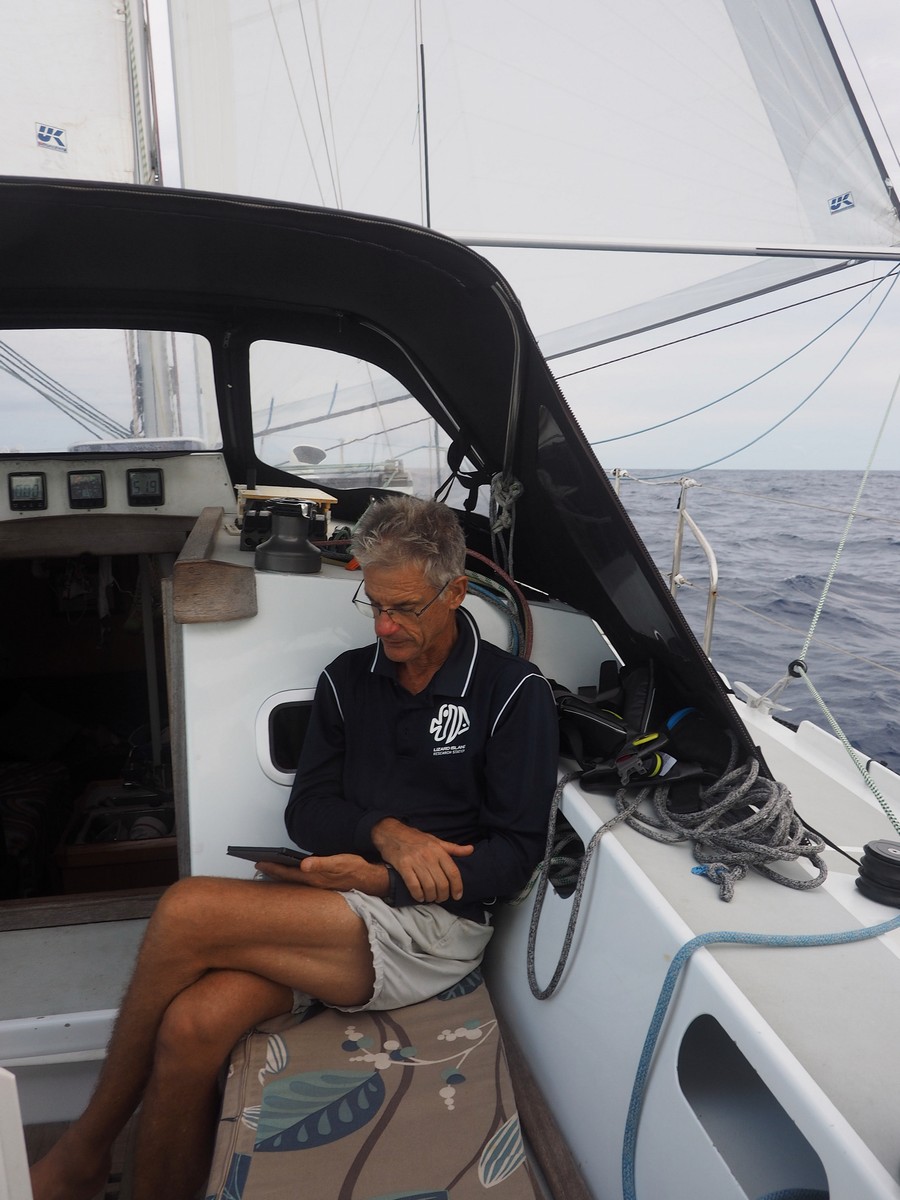
Luckily, most of the passage ended up being calm.
Odds and ends
Aside from worrying about the potential of thunderstorms, the crossing was rather uneventful. Just the way we like it! Twice dolphins came frolicking in to bring a smile to our faces.
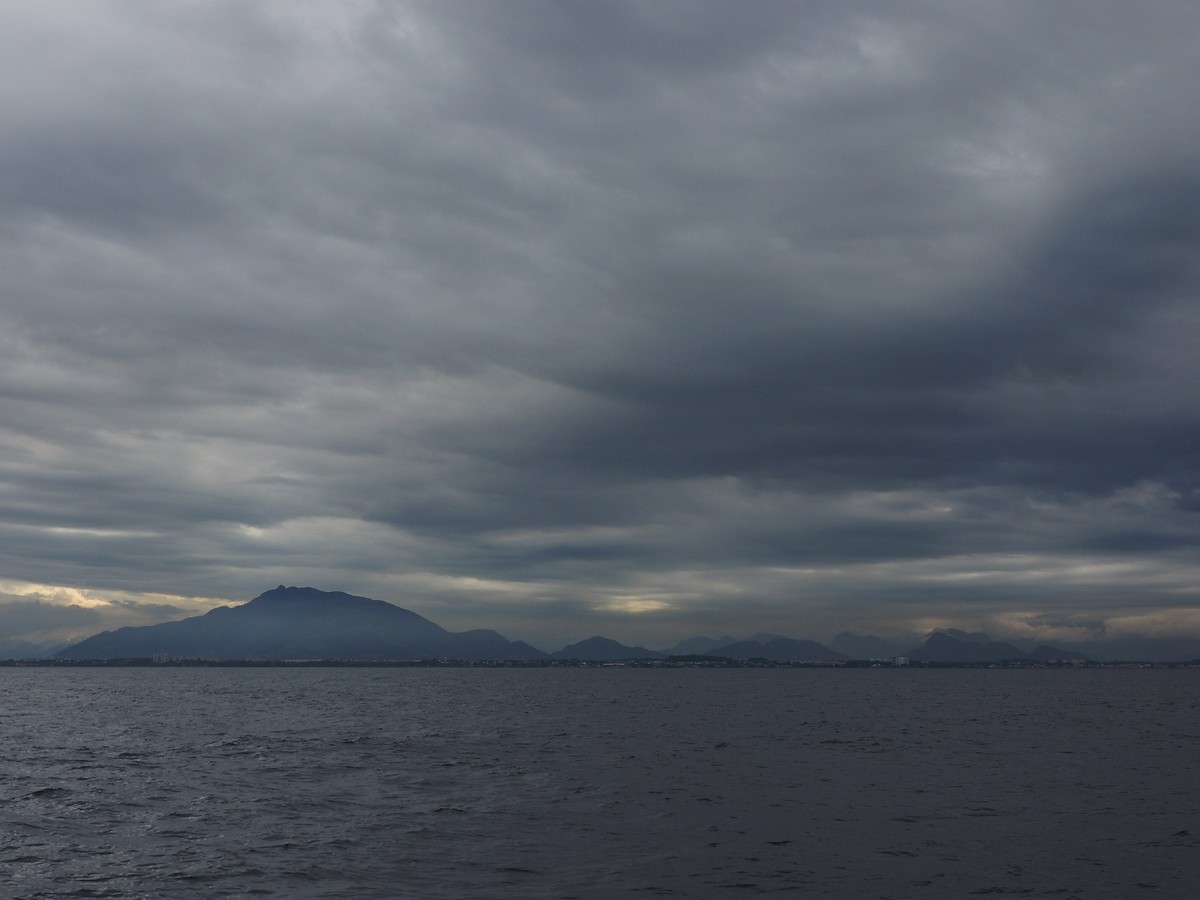
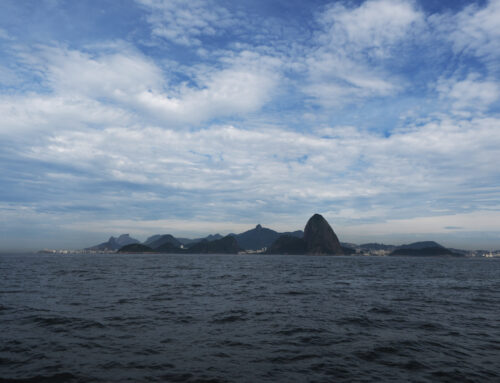
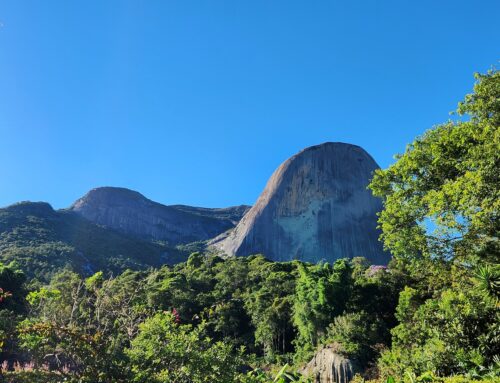
The hills and mountains around Vitória coming into view.
We also got to see something that we are well familiar with from the Great Barrier Reef. This was the presence of a commercial fishing boat hovering along the boundaries of the Abrolhos national park. Fishers around the world, both commercial and recreational, love to hang out at the edge of no-take zones, hoping to snare a few of the bigger fish from higher density populations inside these zones.
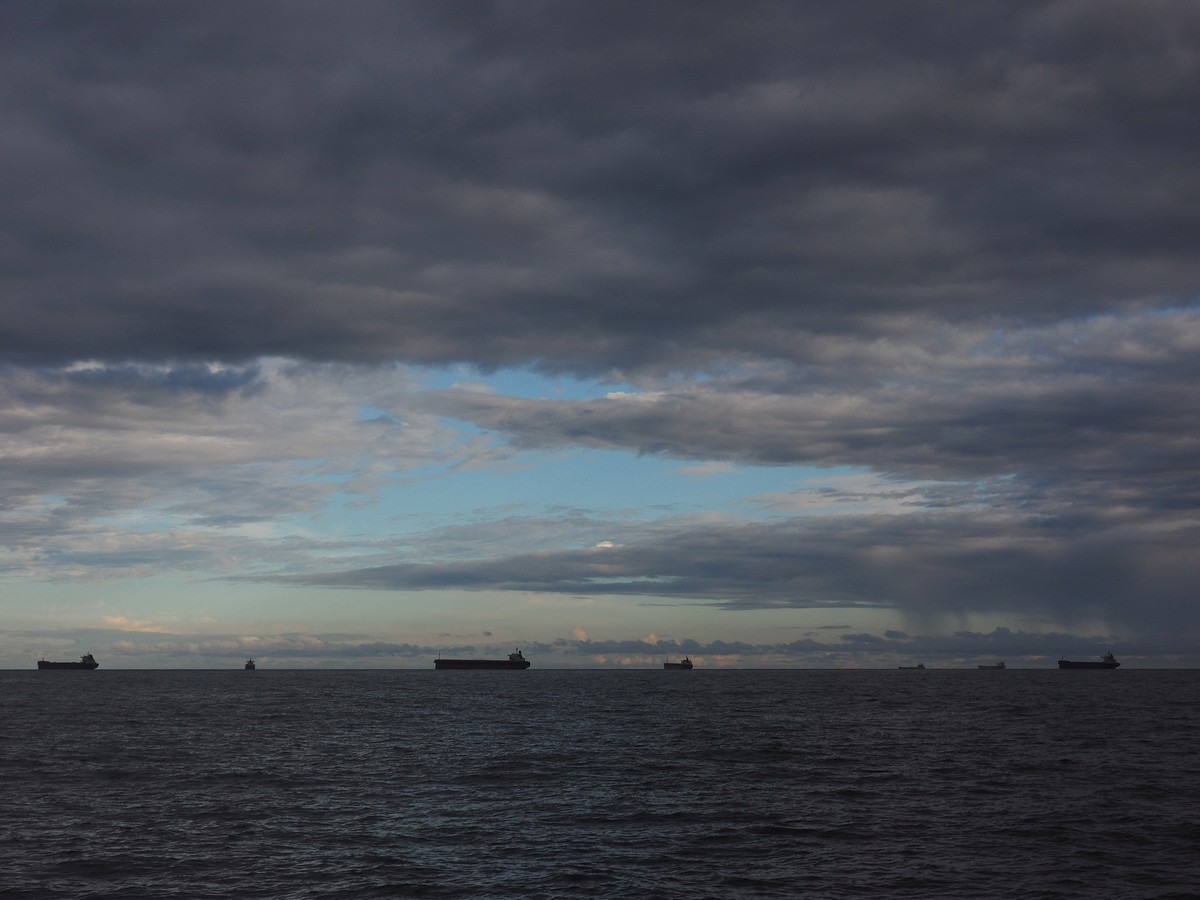
Plenty of cargo vessels to manoeuvre past to get to the Baia de Vitória.
The presence of 17 enormous cargo vessels on anchor outside of Vitória was also reminiscence of certain areas of the Reef, such as the Port of Hay Point where bulk carriers at up to 100 anchorage sites grace the horizon while waiting to be loaded up with coal.
Here in Vitória, cargo vessels are exporting mineral (iron ore, pig iron, petroleum), agricultural (coffee, soybeans) and forestry products (cellulose). As well as, who would have thought, ornamental stones such as marble and granite blocks and slabs.
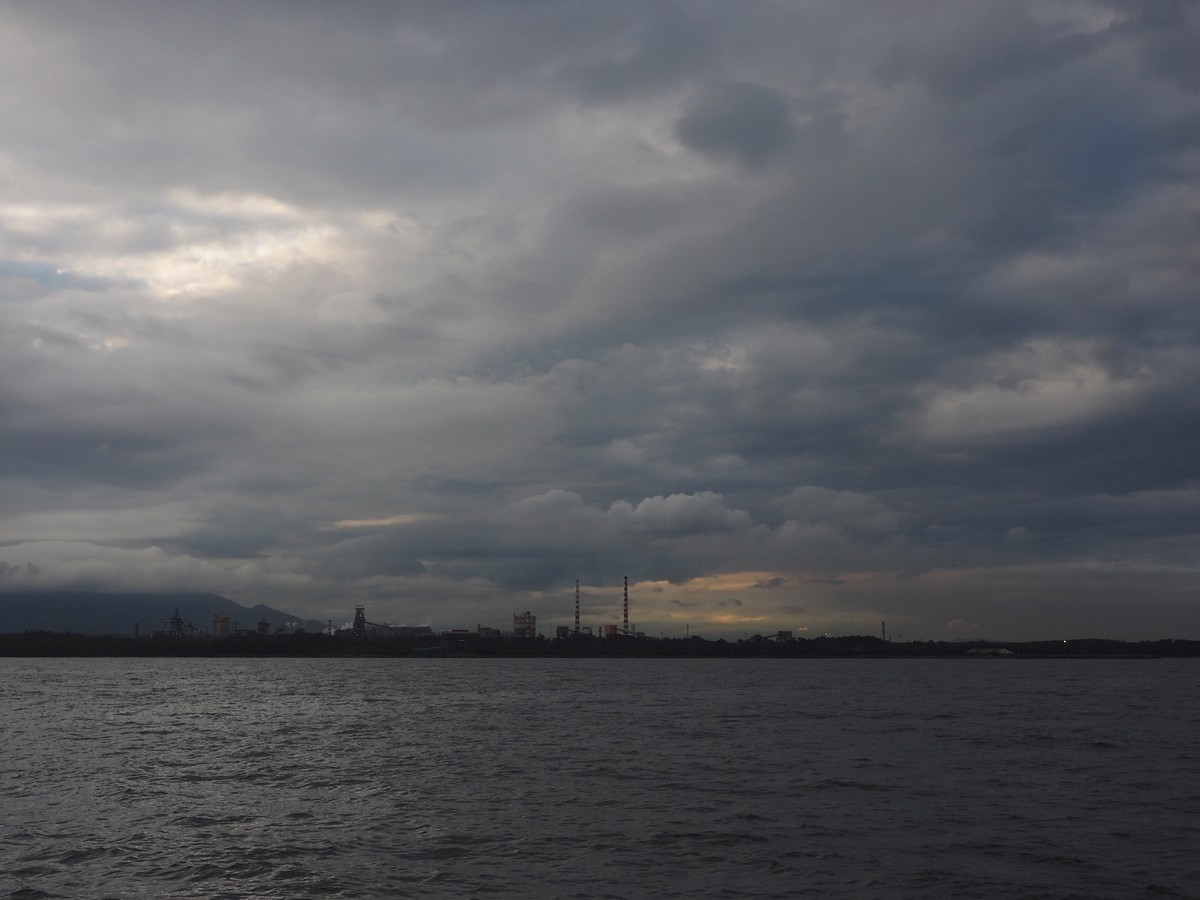
The northern approach to Baia de Vitória under an impressive sky. The industrial skyline reminded us of the first harbour we ever entered with Yuma, IJmuiden in The Netherlands.
A beautiful bay
Meanwhile, we had started the engine to try and get to our anchorage spot off Praia da Curva da Jurema, in Vitória before dark. We managed to do that just in time, and dropped our anchor not too far from SY Asherah, whom we had first met at the OCC BBQ in Pasito Blanco, Gran Canaria, last November and then earlier this year in Salvador.
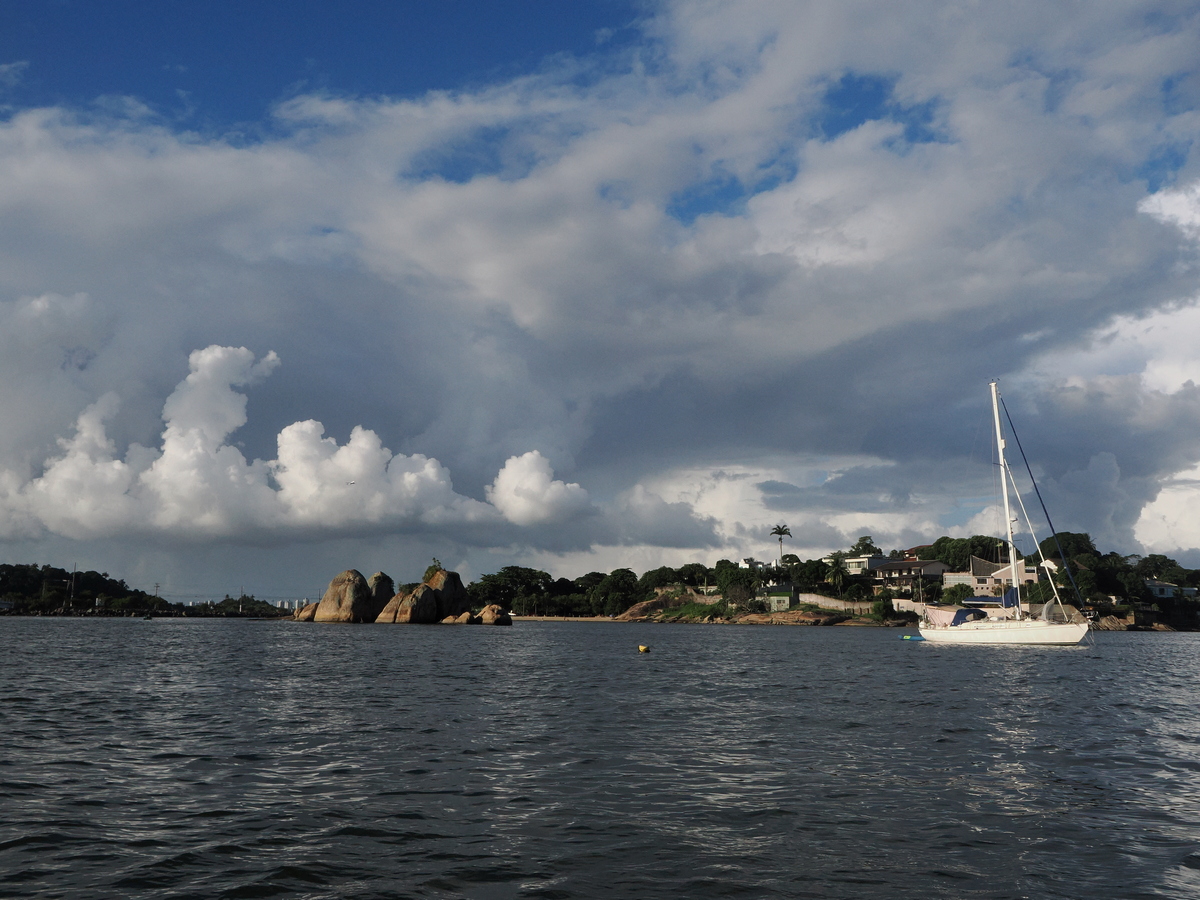
SY Asherah anchored off Praia da Curva da Jurema.
The next morning, we woke up to the sight of a beautiful curved beach with locals swimming, paddling and rowing across the bay and back. This looked rather good! Soon enough, one swimming local stopped by Yuma, welcomed us to his beautiful city of Vitória, told us he had lived in Australia, and recommended a good coffee place. What a welcome!
Keen for some exercise, we hopped in for a swim ourselves and did a nice lap back and forth along the beach in water that was of the perfect temperature. The water quality, on the other hand, seemed a bit off to say the least; turbid, rather eutrophic looking and just a little bit sharky.
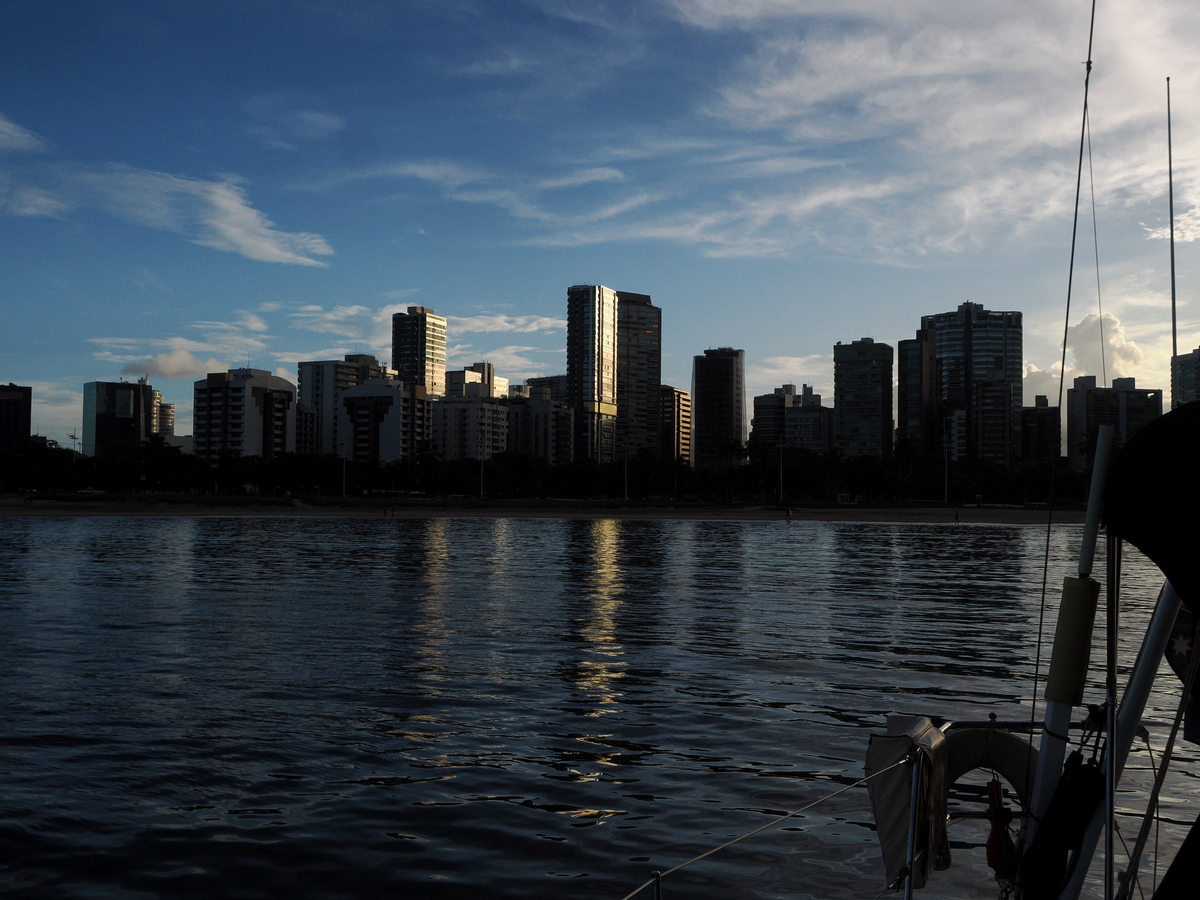
View towards the beach and the city of Vitória. Our home for the next week or so.
But with many locals swimming every day, we ignored the signs of high concentrations of things you don’t want to know about, and enjoyed our daily swim in this very nice setting. We did have a good shower, though, after every dip, and then got on with the business of the day in this new city.

Indrukwekkende wolkenfoto’s!
☁️☁️ ☁️
Mooi hè? Gelukkig gaven ze ons geen problemen, wellicht vanwege de offers die we aan Neptunus hebben gebracht ☺️.
i see that significant El Nino has been ” confirmed” by NOAA. will that impact anything for you guys going forward the next 6 months? or that’s a macro issue and you guys are day to day week to week weather stuff ( technical terms avoided here for clarity)
Yes, good point, and we’re certainly keeping an eye on it, and it is a point of discussion amongst sailors planning to go south to Patagonia later this year. Some on the west coast have already decided not to go.
On the east coast, this El Niño may mean higher rainfall and flooding in NE Argentina, and perhaps stronger storms coming from the Andes along the Argentinian coast.
We’ll see. We’ll come to Oz first (July-Sept), and then evaluate again. For now, the plan is to still go south in November. Luckily Yuma is in a location where we still have options.
Looking forward to catching up again in Oz.